
Pecos County Sex Offender Checks
The Texas Public Sex Offender Registry is the first public channel for a Pecos County sex offender lookup. Texas DPS manages the statewide system. It lets a reader search Pecos County as a whole, narrow to Fort Stockton or Iraan, search a known address, or use a name. Results should be treated as public-notification records, not as a complete list of sexual-offense court cases. Some cases do not create a current public registration duty, and law-enforcement-only information may not appear.
Pecos County registration responsibility depends on where the registrant lives. A person within Fort Stockton or Iraan generally works with that city's local law-enforcement authority. A person outside an incorporated city generally registers through the Pecos County Sheriff's Department. The Pecos County office with jurisdiction can explain its registration procedure and receive a report about suspected noncompliance. DPS remains the best public starting point because it joins statewide records in one interface.
Pecos County Address-Radius Registry Search
A Pecos County address search answers a different question than a name search. Entering a Fort Stockton or Iraan address and selecting a radius can reveal published locations around a point. Pecos County and ZIP filters help when a street name is incomplete. A map marker is only a search aid. It should be opened and matched against the full profile, since address type, status, and update information give the marker its meaning.
The DPS registry search form shows the controls used for that task.
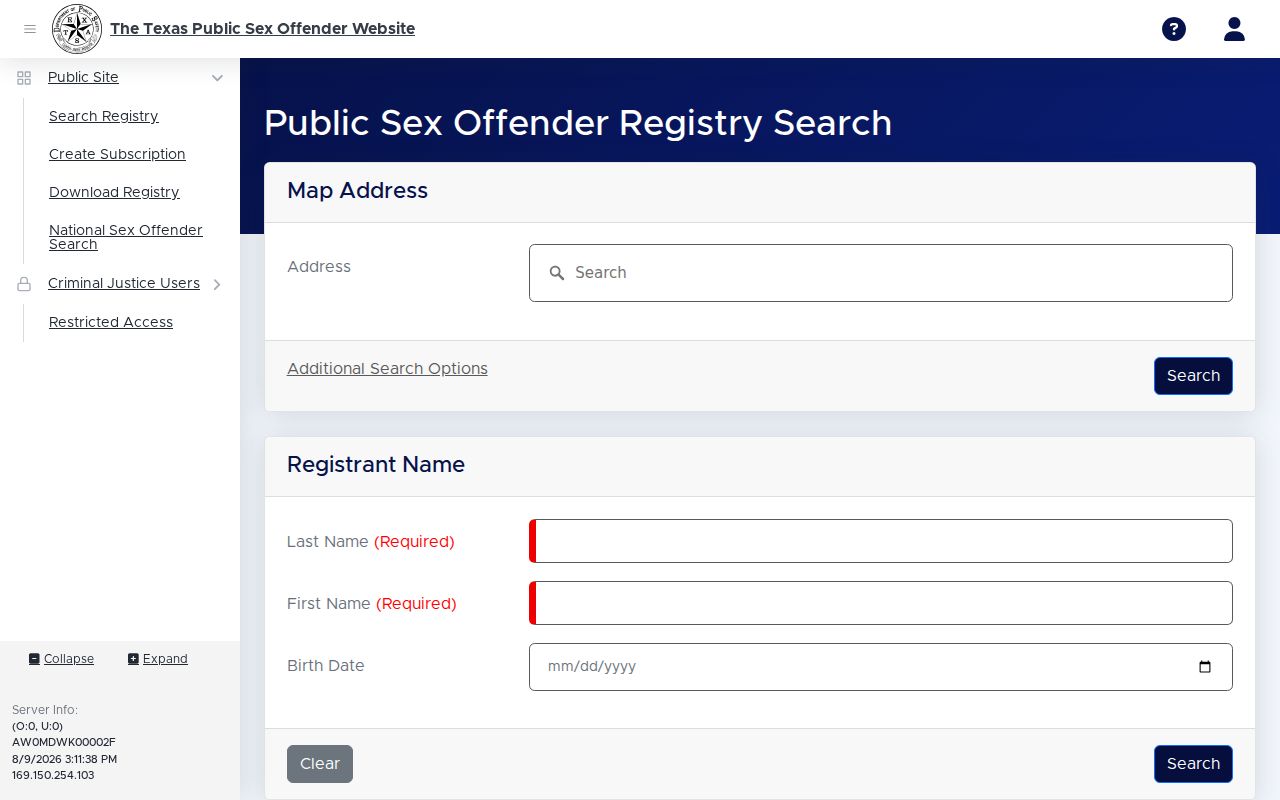
The form supports a Pecos County scan without publishing private search notes or creating a list outside the official system. Search Pecos County first, then repeat by city or address when a boundary or spelling issue may hide a useful result.
Texas Public Sex Offender Registry Searches
The Texas registry places several search routes behind a warning and may require a CAPTCHA. Prepare the known spelling, city, ZIP, or street address before starting. The search is free. When a result seems close but uncertain, compare the photograph, physical description, aliases, and registry identifier. Do not decide identity from a shared surname.
- Open the DPS registry, read the public-use notice, and accept the displayed conditions.
- Select a name, address, city, ZIP, county, or map route that fits the information already known.
- Choose Pecos County or a Pecos County city, then run the search and review the result list.
- Open the full profile and compare identifiers, address type, offense data, status, and update fields.
| Field or control | Type | Required | Use |
|---|---|---|---|
| Search type | Tabs or links | Route | Name, address, school, map, or other displayed route |
| Last and first name | Text | Name route | First name narrows a surname result |
| Address | Text | Address route | Street, city, and ZIP inputs |
| City and county | Text or dropdown | Optional | Choose Fort Stockton, Iraan, or Pecos |
| ZIP Code | Text | Optional | Use five digits |
| Radius | Dropdown | Address route | Use a distance currently offered by DPS |
| Map or list | View control | No | Switch between geographic and result views |
If a search does not resolve a Pecos County question, try a known alias and a second geographic route. Then call the registering authority for procedure or suspected noncompliance. Staff may hold law-enforcement-only data that the public interface does not display, but the absence of a public result is not a clearance certificate.
Pecos County and National Offender Results
A Pecos County search is the right first pass for local awareness, but it does not replace a cross-state search when the relevant person or address may connect to another jurisdiction. The U.S. Department of Justice operates the National Sex Offender Public Website, or NSOPW. It queries participating public registries and provides a broader layer. Its terms must be acknowledged, and the state profile remains the stronger source for Texas-specific status and detail.
The official national interface illustrates that wider search layer.
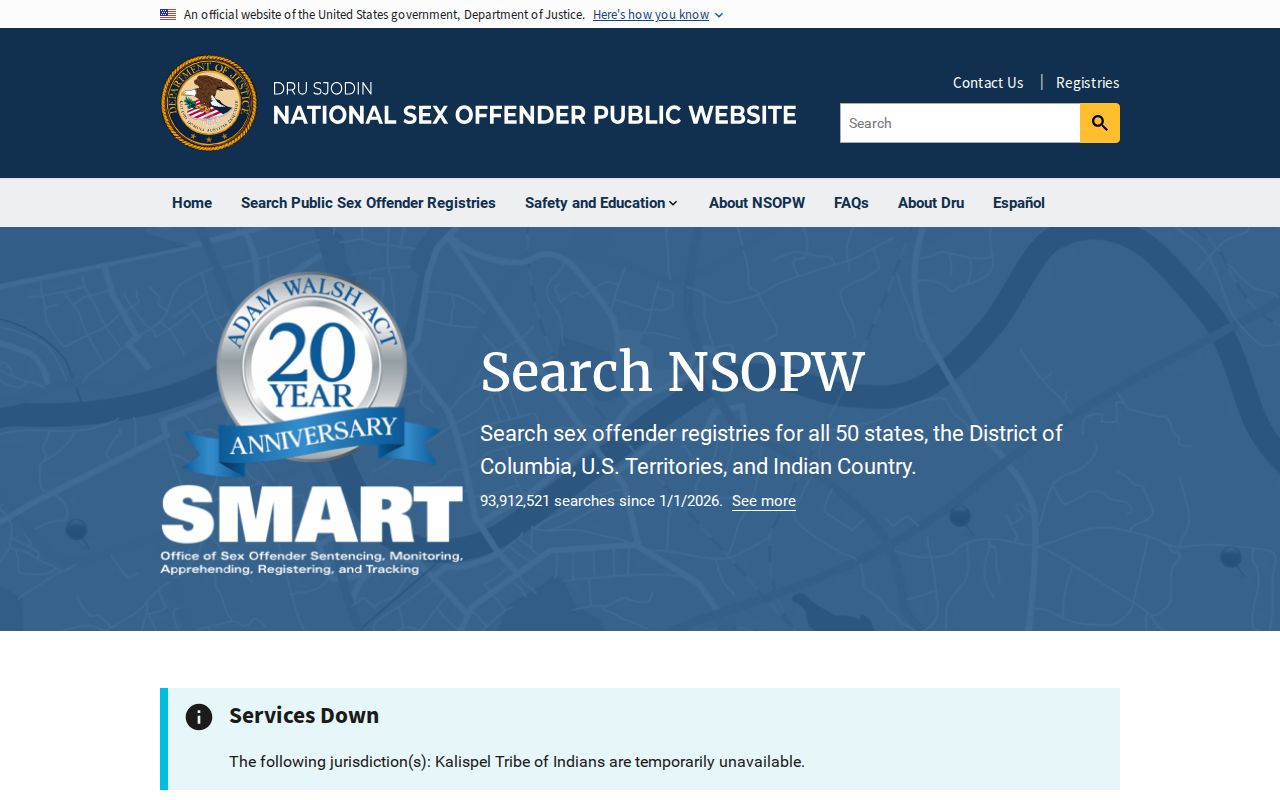
Use NSOPW after the Texas search when residence, travel, or a prior record may cross state lines. A missing national result should not override a matching Texas profile, and differing update dates should be checked with the responsible registry.
Registry Profiles: What They Show
A Pecos County public profile joins identity, location, offense, and registration fields. Some entries can be blank, limited, or historical. Address type matters because a primary residence, secondary location, school, or work field does not mean the same thing. The offense description and registration end date also need to be read with the current status. The Pecos County registry profile is not a full court docket or a complete criminal history.
The DPS profile layout shows how the public fields are grouped.
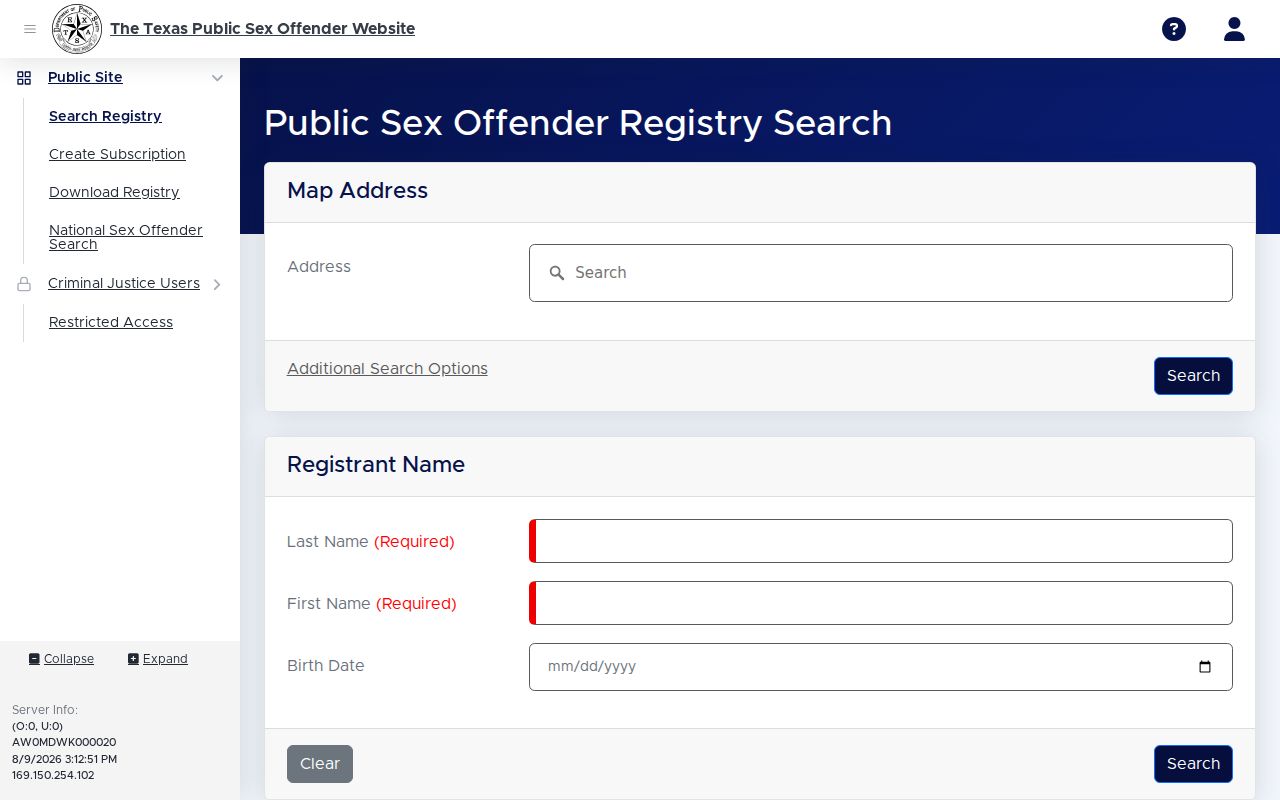
That layout helps readers compare the record as a whole rather than fixating on one field.
| Name and aliases | Published identity variants used to distinguish the person. |
|---|---|
| Photo and description | Photograph, sex, race, height, weight, hair, eyes, age or birth data, and identifying marks where public. |
| Registry identifiers | DPS SID or registry identifier and registration status. |
| Published locations | Primary or secondary address and public employer or school fields where available. |
| Offense information | Description, statute, conviction or adjudication date, court, and victim age or sex category where released. |
| Registration details | Risk level, verification duty, vehicle data, status, and registration end date where displayed. |
Pecos County Offender Registration Routes
Chapter 62 assigns registration work to local law enforcement. Within Fort Stockton, the police department is the likely local authority for a city resident. Iraan Police fills that role within Iraan. The Pecos County Sheriff's Department serves people under county jurisdiction outside those cities. Call the correct authority for current office instructions rather than assuming the sheriff handles every address.
The sheriff is at 1774 North Highway 285, Fort Stockton, Texas 79735, and can be reached at 432-336-3521. The Pecos County page does not publish a separate registry-unit name, counter schedule, or verification calendar. Readers should confirm those points by phone. A suspected stale Pecos County address can be reported to the registering authority. Give the profile identifier and the factual reason for concern, without confronting the listed person.
Note: Local registration staff can review compliance, while the public should use official channels and avoid trying to investigate a registrant personally.
Registration Levels and Duties in Texas
Texas registration duration is based on the reportable offense and the controlling dates. Risk level is a separate assessment shown as low, moderate, or high. Federal SORNA Tier I, II, and III labels should not be substituted for Texas categories. Verification frequency can depend on the specific duty and case, so the public profile and registering authority control rather than a guessed schedule.
| Texas category | General duration | Public reading |
|---|---|---|
| Adult lifetime offense | Life | Offense-based duty; risk level remains separate |
| Other adult reportable offense | Until the tenth anniversary after the later qualifying discharge, dismissal, or release date | Verify the offense and controlling dates |
| Juvenile adjudication | Generally ten years from disposition or completion, whichever is later | Court orders and statutory variations may apply |
| Extrajurisdictional registration | Duration required by controlling foreign, federal, or military law | Texas duties apply while the person is present or resident |
Texas law also requires registrants to report specified changes and complete periodic verification. A failure to comply can be prosecuted as a felony. DPS explains that Chapter 62 itself does not create one statewide rule barring residence near every place used by children. A local ordinance or supervision condition may differ, so readers should verify the rule that applies to the specific address and person.
Pecos County Registry Searches on Mobile
The Texas DPS mobile app advertises registry searches by location, name, route, and proximity. That can be useful while planning a trip or reviewing the area around a known place. Mobile proximity is not a substitute for reading the full profile. Location services, map scale, an address update, and the type of published location can all affect what a nearby marker seems to show.
For routine Pecos County checks, use the web registry and mobile tool as two views of the same DPS source. Compare Pecos County profile details before drawing a conclusion. If the app and website appear out of step, the responsible Pecos County registration office can receive a factual inquiry. For a court outcome behind the registration, use the appropriate clerk rather than asking the registry to supply the whole case file.
Pecos County Offender Community Notice
Pecos County community notification under Texas law can extend beyond the searchable profile. High-risk notification may include mailed postcards to nearby homes and businesses. DPS and the Pecos County authority maintain different parts of the process: DPS publishes statewide public data, while the Pecos County authority verifies registration information for the person under its jurisdiction. The registry is meant to support awareness and practical safety choices.
The public should not treat registry pins as a measure of neighborhood crime or assume each registrant presents the same facts or risk. Review the stated offense, risk level, registration status, and address type. Families can use the data to discuss boundaries and safety without sharing a person's profile as gossip or using it to prompt confrontation.
Using Registry Information Lawfully
The Texas Code of Criminal Procedure Chapter 62 governs registration, public release, verification duties, and community notification. Registry information supports public awareness. It does not authorize threats, harassment, discrimination, trespass, or an offense against a registrant or another member of a household. A concern about possible noncompliance belongs with law enforcement.
The official Chapter 62 text supplies the legal frame for Pecos County registry information.
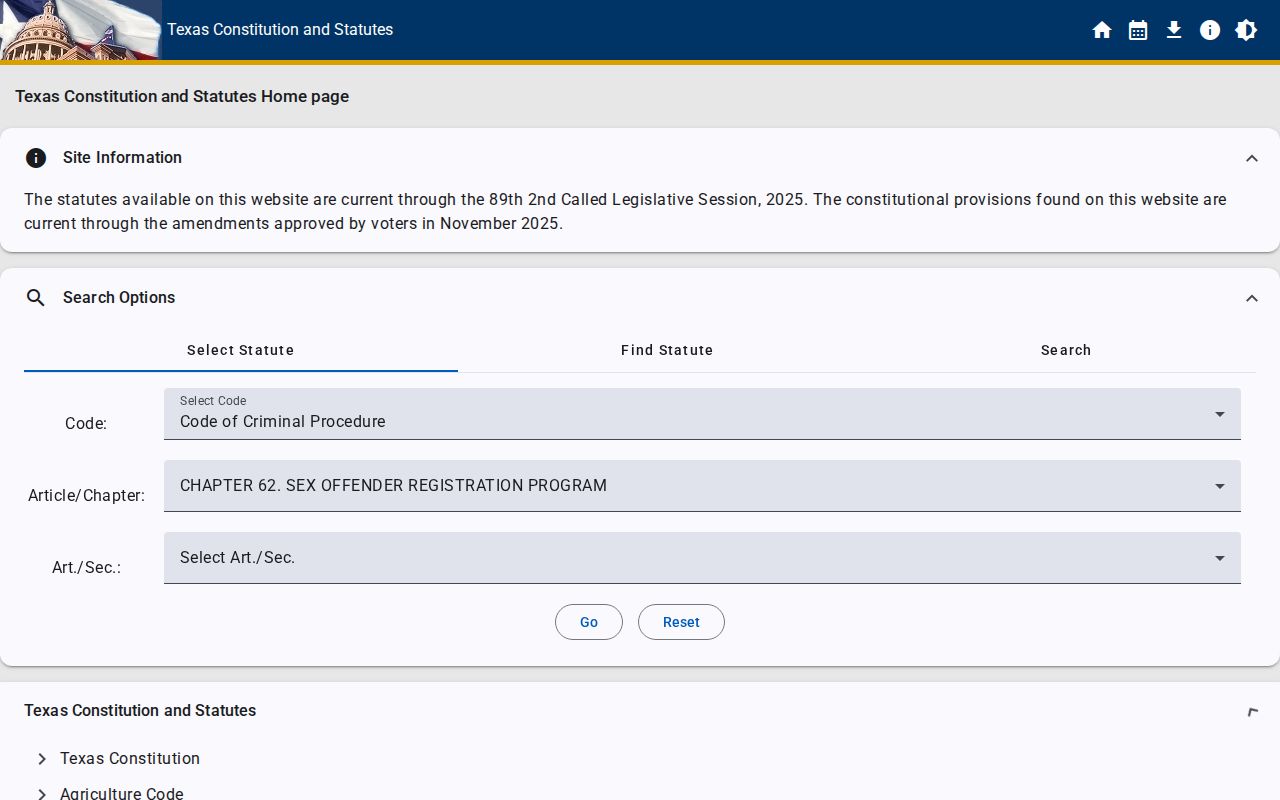
The statute also shows why offense-based duration and Texas risk concepts must be read on their own terms.
Misuse warning: Chapter 62 does not permit anyone to injure, harass, threaten, or commit a crime against a registrant; misuse can bring criminal or civil consequences.